
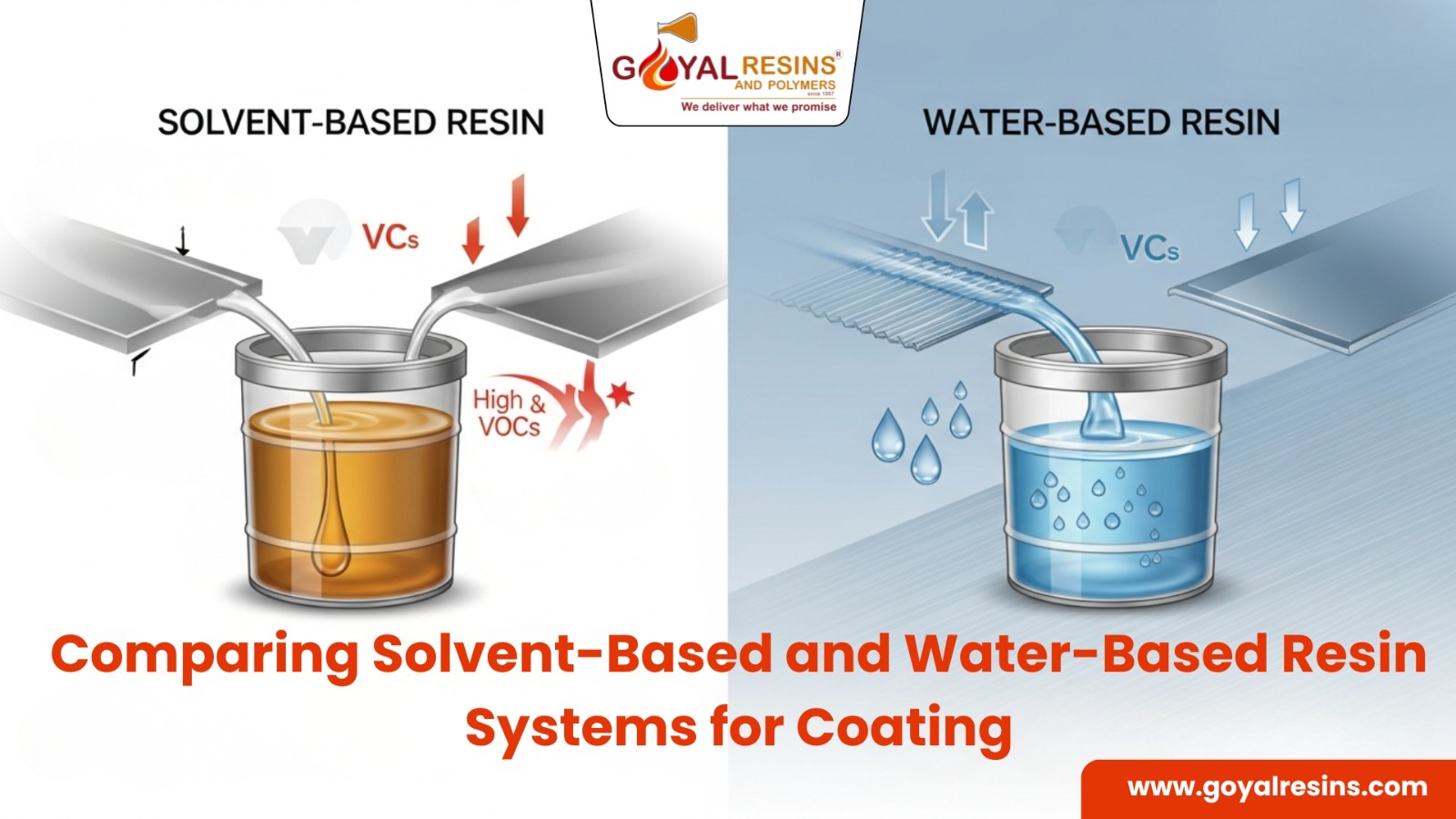
Coatings play a vital role in protecting surfaces, enhancing appearance, and extending the service life of products across industries such as construction, automotive, industrial manufacturing, and consumer goods. At the core of every coating formulation lies the resin system, which determines performance characteristics such as durability, adhesion, chemical resistance, and environmental impact.
Among the various options available, resin systems for coatings are most commonly categorized into solvent-based and water-based systems. As industries move toward sustainability while maintaining high-performance standards, understanding the differences between these two resin technologies becomes increasingly important.
ResinsResins are the film-forming components of coatings. Once applied and cured, they create a continuous protective layer over a substrate. The resin system influences mechanical strength, flexibility, gloss retention, weather resistance, and overall longevity of the coating.
Historically, coatings relied heavily on organic solvents to dissolve or disperse resins, making application easy and performance reliable. However, increasing environmental regulations and health concerns have accelerated the development of water-based alternatives that reduce volatile organic compound (VOC) emissions.
Solvent-based resin systems use organic solvents to dissolve resins such as epoxy, polyurethane, acrylic, or alkyd. These systems have been widely used for decades due to their robust performance and versatility.
One of the key strengths of solvent-based coatings is their excellent film formation. The solvent evaporates after application, allowing the resin to flow smoothly and form a uniform, defect-free coating. This makes them particularly suitable for demanding environments where high chemical resistance, abrasion resistance, and strong adhesion are required.
Solvent-based systems also perform well under varied environmental conditions. They can be applied in low temperatures or high humidity levels with minimal impact on curing and final properties. For industries such as marine, oil and gas, and heavy industrial equipment, solvent-based coatings remain a preferred choice.
However, these benefits come with notable drawbacks. The high VOC content contributes to air pollution and poses health risks to applicators. Strict environmental regulations in many regions now limit or control the use of solvent-based formulations.
Water-based resin systems use water as the primary carrier instead of organic solvents. The resin is either dissolved or dispersed in water using advanced polymer chemistry techniques.
The most significant advantage of water-based coatings is their low VOC content. This makes them more environmentally friendly and safer for both manufacturers and end users. Reduced odor, lower flammability, and easier cleanup further enhance their appeal.
Modern water-based coatings have improved significantly in terms of performance. Advances in resin design have enabled better adhesion, faster drying times, and enhanced resistance to chemicals and weathering.
Despite these advancements, water-based coatings can be sensitive to application conditions such as high humidity or low temperatures, and achieving extreme chemical resistance may still be challenging in certain applications.
Solvent-based coatings typically offer superior penetration and adhesion on difficult substrates such as metals. Their resistance to chemicals, fuels, and oils is often higher, making them suitable for aggressive industrial environments.
Water-based coatings excel in applications where environmental compliance and user safety are critical. With proper formulation and application control, they deliver excellent durability, color retention, and aesthetic appeal.
Regulatory agencies worldwide are imposing stricter limits on VOC emissions, pushing manufacturers to reformulate products or adopt alternative technologies. Water-based systems align well with sustainability goals, while solvent-based coatings often require additional controls and handling procedures.
Heavy-duty industrial sectors continue to rely on solvent-based coatings for harsh environments. Construction, consumer goods, and packaging industries increasingly prefer water-based systems for safety and compliance.
Hybrid resin technologies are also emerging, combining features of both systems to balance performance and regulatory requirements.
Both solvent-based and water-based resin systems have distinct advantages and limitations. Solvent-based systems deliver unmatched performance in demanding conditions, while water-based systems offer a safer, more sustainable solution.
As coating technology advances, the performance gap continues to narrow. By understanding these differences, manufacturers and end users can make informed decisions that align with both technical requirements and environmental responsibility.