
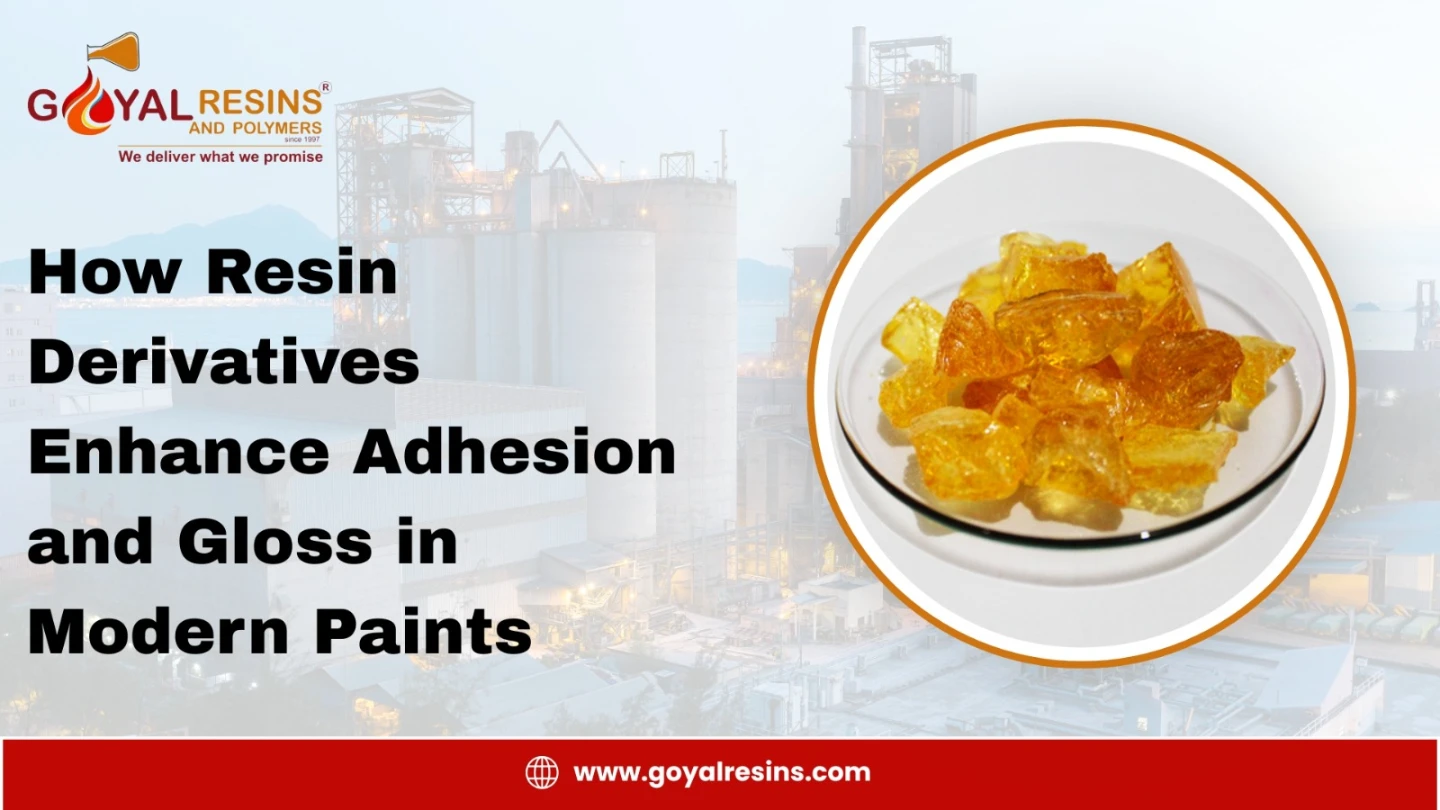
Modern paint formulations are no longer just about color—they are about performance, durability, and finish. One key ingredient driving these improvements is Resin Derivatives. Known for their versatility and reliability, these resins play a crucial role in enhancing both adhesion and gloss in paints used across industries.
What Are Resin Derivatives?
Resin derivatives are chemically modified products of natural or synthetic resins. Through processes such as esterification, hydrogenation, or polymerization, resins are transformed into stable compounds suitable for high-performance coatings. These derivatives are valued for their excellent film-forming ability, strong bonding properties, and compatibility with various paint systems.
Importance of Resin Derivatives in Paint Formulation
In the paint industry, resin derivatives are used as film-forming resins and adhesion promoters. They help create a durable and uniform film on surfaces, improving both appearance and longevity. Their flexibility in formulation allows paint manufacturers to use them in water-based, solvent-based, and hybrid coatings, ensuring consistent performance in diverse applications.
The Role of Adhesion in Paints
Why Adhesion Is Important
Adhesion defines how well a paint layer bonds with the surface beneath it. Strong adhesion prevents issues like flaking, peeling, or cracking. Whether it’s a decorative wall or an industrial structure, adhesion ensures lasting protection and performance.
Challenges with Poor Adhesion
Poor adhesion can cause coatings to deteriorate quickly under environmental or mechanical stress. This not only affects aesthetics but also compromises surface protection against corrosion or wear.
How Resin Derivatives Improve Adhesion
Resin derivatives enhance adhesion through their polar functional groups, which form strong interactions with surface materials. They improve the wetting ability of paint, ensuring even coverage and deeper penetration on different substrates such as wood, metal, and concrete. Their molecular structure helps create a durable interface between the coating and substrate, providing excellent resistance against peeling and environmental damage.
Understanding Gloss in Paints
What Is Gloss?
Gloss is the reflective quality of a paint film that gives surfaces a shiny and smooth appearance. It’s measured by how much light is reflected off the surface at specific angles.
Why Gloss Matters
High gloss levels not only improve the visual appeal of a surface but also increase resistance to dirt, moisture, and UV exposure. A glossy surface is easier to clean and retains its aesthetic value for longer periods.
How Resin Derivatives Enhance Gloss
Resin derivatives contribute to gloss enhancement by forming smooth, continuous films during the drying process. Their high transparency and uniform particle dispersion minimize surface irregularities, resulting in better light reflection. By controlling the surface tension of paints, they allow for excellent flow and leveling, ensuring a mirror-like finish. These characteristics make them ideal for decorative and automotive applications where visual quality is paramount.
Types of Resin Derivatives Used in Paints
- Modified Resin Esters
- Maleic-Modified Resin Resins
- Phenolic-Modified Resin Resins
Created by reacting resins with polyols, they provide improved solubility and compatibility in paint systems, boosting gloss and adhesion.
These derivatives offer high hardness, excellent film formation, and improved water resistance—ideal for high-performance coatings.
Known for superior chemical and heat resistance, these resins ensure durability and long-lasting gloss in industrial coatings.
Advantages of Using Resin Derivatives
- • Superior Adhesion: Ensures stronger bonding with multiple substrates.
- • Enhanced Gloss: Improves the reflective quality of paint surfaces.
- • Eco-Friendly: Many resin derivatives are derived from renewable resources.
- • Durability: Increases the lifespan of coatings under various environmental conditions.
- • Cost-Effectiveness: Reduces the need for multiple layers, saving time and materials.
Resin Derivatives in Water-Based Paints
In water-based coatings, resin derivatives act as emulsifying agents that improve stability and film integrity. They enhance adhesion even on non-porous surfaces while maintaining the low-VOC and eco-friendly properties of the formulation. Their excellent dispersibility also ensures pigment stability and consistent finish quality, which is essential in decorative paints.
Resin Derivatives in Solvent-Based Paints
In solvent-based systems, resin derivatives provide flexibility, hardness, and improved surface smoothness. They contribute to gloss retention and help coatings withstand environmental stresses like UV exposure, temperature fluctuations, and humidity. Their excellent solubility in organic solvents ensures compatibility with various additives and pigments used in industrial-grade coatings.
Compatibility with Other Additives
Resin derivatives work well with other paint ingredients, including alkyds, acrylics, and polyurethane resins. Their chemical structure allows easy blending, improving the overall performance of the final coating without compromising stability or shelf life.
Recent Developments and Innovations
Recent advancements in polymer and resin technology have led to the development of eco-friendly, water-dispersible resin derivatives. These innovations aim to reduce volatile organic compounds (VOCs) while maintaining the same performance standards. The shift toward sustainable materials has made resin derivatives an essential component in next-generation coatings.
Conclusion
Resin derivatives have become indispensable in modern paint formulations. Their ability to enhance adhesion and gloss ensures superior film quality, durability, and visual appeal. Whether in decorative, automotive, or industrial coatings, they provide the perfect combination of performance and sustainability. With their cost-effectiveness, natural origin, and excellent compatibility, resin derivatives continue to shape the future of eco-friendly and high-performance paints across the globe.